Pesented By

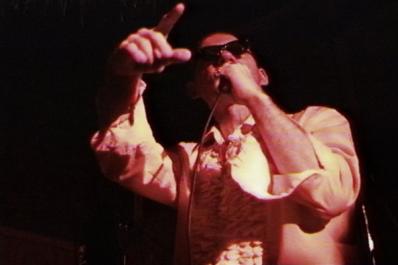
Why would a tuxedo-clad trio of lounge musicians cover hardcore punk songs? Rolling Stone magazine polled their staff and voted Black Velvet Flag “Critic’s Pick for the Best Unsigned Band for 1994.” Lauded by the Village Voice and praised by music critics in New York City, Black Velvet Flag performed to roaring applause and barbarous insults from the hardcore punk faithful. Disc jockeys played their music on alternative radio stations in college towns across the United States. Yet, Black Velvet Flag’s ambitions and the circumstances that unfolded with their fame rose, and became a story that every want-to-be pop musician has endured.
The music of Black Velvet Flag consciously critiqued the audience’s craving, not for resisting conformity, but for the nostalgia of resisting conformity at a time when “alternative” culture was more marketable than the mainstream. Strangely, the band members themselves played for a variety of changing motives whose conflicts expressed the very contradictions that made them interesting. But these opposing motives of fame and creative purity set the scene for capricious conflict in this documentary about the rise and fall of one unusual band.
How did Fred Stesney (singer), Jeff Musser (bass player), and Jason Zasky (guitarist) come together to make their music? Why did they gain such attention? How did their brief and limited brush with fame dissipate and dissolve?
Their story is exemplary both of the process of the commercialization of youth culture, and of the experiences that ambitious musicians must endure. While this band was a concept that made people think about how Punks grew up, it was also a band that attempted to reconcile the contradictions of their lives, and the lives of their generation. The Rise and Fall of Black Velvet Flag ultimately documents the experience of these three average young men, caught up in the conflicting desire to make a mark in the world of popular music, while still hanging on to their desire to become simply middle-class.